Luxury raffia bags deserve special care to maintain their beauty and longevity. Dust accumulation inside these natural fiber accessories can damage linings and create unpleasant odors. Learning proper cleaning techniques protects your investment while preserving the bag’s distinctive texture and appearance.
Understanding Raffia Material and Its Unique Challenges
Raffia comes from dried palm leaves native to Madagascar and tropical regions. This natural material creates lightweight, breathable bags with distinctive woven textures. However, raffia’s porous nature attracts and traps dust particles easily.
The fibers can become brittle when exposed to harsh chemicals or excessive moisture. Therefore, gentle cleaning methods prevent damage while effectively removing interior dust. Additionally, raffia bags often feature delicate linings made from silk, cotton, or synthetic materials requiring careful handling.
Luxury brands like Prada, Loewe, and Bottega Veneta incorporate raffia into their seasonal collections. These investment pieces command prices ranging from several hundred to thousands of dollars. Consequently, proper maintenance protects both aesthetic appeal and resale value.
Essential Tools for Cleaning Raffia Bag Interiors
Gathering appropriate supplies before starting ensures efficient and safe cleaning. The right tools prevent damage while thoroughly removing accumulated dust and debris.
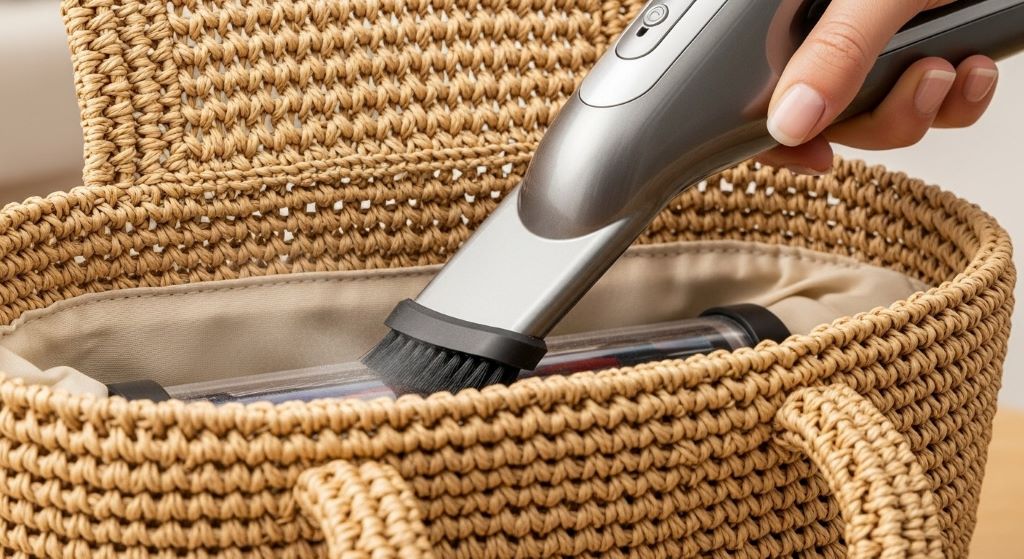
A handheld vacuum with soft brush attachment works best for initial dust removal. Alternatively, a small battery-operated handheld vacuum provides gentle suction without overwhelming delicate materials. Avoid using full-power household vacuums that might damage interior linings.
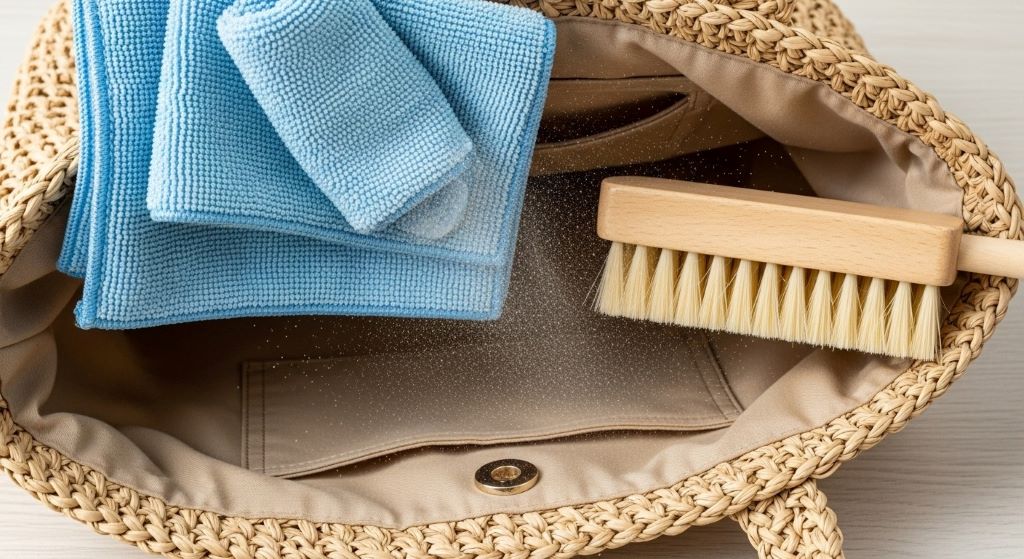
Microfiber cloths attract dust particles without scratching surfaces. White cloths show dirt accumulation, helping you monitor cleaning progress. Additionally, lint rollers remove stubborn particles from fabric linings quickly and safely.
Soft-bristled brushes, such as makeup brushes or paintbrushes, reach corners and crevices. Natural bristles work better than synthetic options for delicate materials. Moreover, compressed air cans dislodge dust from tight spaces without physical contact.
Mild dish soap diluted in distilled water creates safe cleaning solution when needed. Distilled water prevents mineral deposits on natural fibers. Furthermore, white vinegar mixed with water offers natural deodorizing properties without harsh chemicals.
Step-by-Step Guide to Removing Interior Dust
Begin by emptying your raffia bag completely. Check all pockets, compartments, and hidden spaces for forgotten items. Turn the bag upside down and gently shake to dislodge loose dust and debris.
Use a handheld vacuum with low suction setting and soft brush attachment. Hold the vacuum opening slightly away from the lining to prevent fabric damage. Move systematically from one section to another, covering all interior surfaces thoroughly.
For fabric linings, use a lint roller in smooth, consistent motions. Roll from top to bottom in overlapping passes. Replace sticky sheets frequently to maintain effectiveness. This method captures fine dust particles that vacuums might miss.
Address corners and seams with soft-bristled brushes. Gently sweep dust toward the bag’s opening where you can vacuum it away. Additionally, use compressed air to blow dust from tight crevices and decorative elements.
Inspect the interior after initial cleaning. Look for remaining dust accumulation or stains requiring additional attention. Therefore, good lighting helps identify areas needing further treatment.
Treating Stubborn Dust and Light Stains
Some dust embeds itself into fabric weaves or creates light discoloration. These situations require slightly more intensive cleaning while maintaining gentleness toward delicate materials.
Create a cleaning solution using one teaspoon mild dish soap per cup of distilled water. Test this mixture on an inconspicuous interior area first. Wait 24 hours to ensure no discoloration or damage occurs.
Dampen a white microfiber cloth with the cleaning solution. Wring thoroughly until barely moist, not wet. Gently blot affected areas without rubbing, which can spread stains or damage fibers.
For persistent dust embedded in fabric texture, use a barely damp soft-bristled brush. Work in small circular motions, applying minimal pressure. However, avoid saturating the material, as excess moisture damages both raffia and linings.
Blot treated areas with a dry microfiber cloth immediately. Press firmly to absorb moisture without rubbing. Additionally, allow the bag to air dry completely with the interior exposed before closing or using.
According to Good Housekeeping, natural fiber bags require air drying away from direct heat sources to prevent warping and cracking.
Addressing Odors Accompanying Dust Accumulation
Dust often carries musty odors, especially in bags stored in closets or humid environments. Eliminating these smells requires deodorizing techniques safe for natural materials.
Baking soda naturally absorbs odors without chemical residue. Fill a small cloth sachet or coffee filter with baking soda. Place inside the bag overnight or for 24 hours. Remove and vacuum any residual powder thoroughly.
Alternatively, activated charcoal bags effectively neutralize persistent odors. These reusable sachets work continuously when placed inside stored bags. Moreover, they prevent future odor development between uses.
White vinegar solution offers natural deodorizing properties. Mix equal parts distilled water and white vinegar. Lightly mist a microfiber cloth with this solution, never spray directly onto the bag. Wipe interior surfaces gently, then air dry completely.
Fresh air provides the simplest deodorizing method. Place your bag in a well-ventilated area away from direct sunlight. Leave the bag open for several hours or overnight. Therefore, natural air circulation removes trapped odors effectively.
Cleaning Delicate Lining Materials
Luxury raffia bags feature various lining materials requiring specific care approaches. Identifying your bag’s lining type ensures appropriate cleaning methods.
Silk linings demand extreme gentleness. Use only dry cleaning methods like vacuuming and lint rolling. Moisture can cause water spots or permanent damage to silk fibers. Additionally, professional cleaning services specialize in luxury bag care when needed.
Cotton linings tolerate slightly more moisture than silk. The barely-damp cloth method works well for cotton interiors. However, thorough drying remains essential to prevent mildew growth within natural fibers.
Synthetic linings offer greater durability and moisture resistance. These materials handle gentle spot cleaning more effectively. Nevertheless, avoid harsh chemicals that might affect color or texture.
Leather-lined raffia bags require leather-specific care products. Test leather cleaners on hidden areas first. Furthermore, conditioning products maintain suppleness after cleaning dust accumulation.
Preventing Future Dust Accumulation
Proactive measures reduce cleaning frequency while protecting your luxury raffia bag. Simple storage and usage habits make significant differences in maintaining cleanliness.
Store raffia bags in dust covers or cotton pillowcases when not in use. These breathable barriers prevent dust settlement while allowing air circulation. Avoid plastic bags that trap moisture and encourage mildew growth.
Keep bags in climate-controlled environments away from excessive humidity. Damp conditions deteriorate natural fibers and promote musty odors. Therefore, closets with good ventilation work better than basement or attic storage.
Stuff bags with acid-free tissue paper to maintain shape during storage. This practice also absorbs residual moisture and prevents interior surfaces from touching. Additionally, tissue creates barriers against dust penetration.
Clean bags regularly, even when they appear spotless. Monthly quick vacuum sessions prevent significant dust buildup. Consequently, light maintenance proves easier than intensive deep cleaning.
Empty bags completely after each use. Crumbs, receipts, and small debris attract dust and create cleaning challenges. Moreover, regular emptying helps identify developing issues before they worsen.
According to Real Simple, proper storage extends handbag lifespan significantly while reducing maintenance requirements.
When to Seek Professional Cleaning Services
Some situations warrant professional expertise rather than home cleaning attempts. Recognizing these circumstances prevents accidental damage to valuable accessories.
Significant stains penetrating through to exterior raffia require professional treatment. Home methods might spread stains or damage natural fibers irreparably. Professional cleaners possess specialized knowledge and appropriate solutions.
Mold or mildew growth demands immediate professional attention. These fungi compromise structural integrity and pose health concerns. Therefore, specialized treatment prevents further damage and ensures thorough remediation.
Vintage or extremely valuable raffia bags benefit from professional care. These pieces often feature delicate construction or rare materials requiring expert handling. Additionally, professionals document cleaning processes for insurance purposes.
Combination materials, such as raffia with leather trim or beading, complicate home cleaning. Different materials require conflicting care approaches. Consequently, professionals coordinate appropriate treatments for mixed-material accessories.
Unknown interior stains or discoloration suggest seeking expert evaluation. Improper treatment might worsen conditions or create permanent damage. Professional assessment provides accurate diagnosis and appropriate solutions.
Maintaining Raffia Bag Exteriors
While focusing on interior dust removal, maintaining exterior conditions prevents contamination transfer. Clean exteriors reduce dust and debris entering bag interiors.
Brush exterior raffia gently with soft-bristled brushes weekly. Remove surface dust before it works into woven textures. Additionally, this practice maintains the material’s natural luster and appearance.
Spot clean exterior marks immediately using barely-damp cloths. Quick attention prevents stains from setting into porous raffia fibers. However, always test cleaning solutions on inconspicuous areas first.
Protect raffia from moisture exposure during use. Rain and spills damage natural fibers quickly. Therefore, carry protective covers during unpredictable weather conditions.
Avoid placing raffia bags on dirty surfaces. Floors, restaurant tables, and car trunks transfer grime to bag bottoms. Moreover, metal studs or protective feet reduce direct surface contact.
Conclusion
Cleaning interior dust from luxury raffia bags requires gentle techniques respecting natural materials. Regular vacuuming with appropriate attachments, lint rolling, and soft brushing effectively remove accumulated dust. Therefore, proper tool selection and methodical approaches protect delicate linings while maintaining bag beauty. Preventive storage measures reduce cleaning frequency, while knowing when to seek professional help protects valuable investments. With consistent care and appropriate techniques, your luxury raffia bag remains pristine for years of enjoyment.
Frequently Asked Questions
Can I use a regular vacuum cleaner on my raffia bag interior?
No, regular vacuum cleaners provide too much suction and can damage delicate linings. Use handheld vacuums with soft brush attachments on low settings. Alternatively, lint rollers and soft brushes offer safer dust removal methods.
How often should I clean dust from my luxury raffia bag?
Clean your raffia bag interior monthly with quick vacuum sessions to prevent significant dust buildup. Deep clean every three to six months depending on usage frequency. However, bags in storage require cleaning before and after storage periods.
Will water damage my raffia bag’s interior lining?
Excessive water damages most bag linings, especially silk and natural fibers. Use barely-damp cloths wrung thoroughly, never saturate materials. Always allow complete air drying before closing or using the bag again.
What causes musty smells inside raffia bags?
Dust accumulation combined with humidity creates musty odors inside raffia bags. Additionally, storing bags in damp environments promotes mildew growth. Use baking soda or activated charcoal to absorb odors naturally.
Should I take my expensive raffia bag to professional cleaners?
Professional cleaning is recommended for significant stains, mold growth, vintage pieces, or when unsure about proper treatment methods. Professionals possess specialized knowledge and appropriate solutions protecting valuable luxury accessories.
Related Topics:
How to Clean a Nylon Handbag Like a Pro