
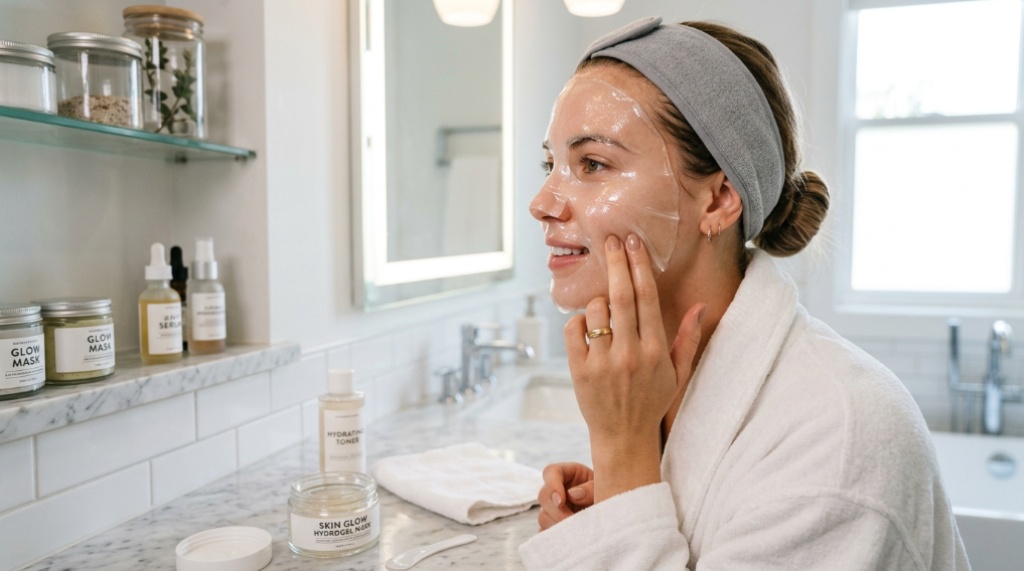
Most skincare routines ask for effort: cleanse, tone, layer, wait, rinse, repeat. Overnight hydrogel masks flipped that logic by turning eight hours of sleep into treatment time. Instead of masking for twenty minutes and hoping the results last, you apply a flexible gel sheet before bed and let it work while you rest. That shift — from active effort to passive overnight care — is the core reason the format spread from Seoul to global routines so quickly. Readers tracking how this trend moved into mainstream American beauty often start with resources like The Bold Collection, which follows the category’s regional adoption. Below, we explain what actually made overnight hydrogel masks essential rather than just novel.
Quick Answer
Overnight hydrogel masks became a K-beauty essential because they combine two things Korean skincare already prioritized: deep hydration and convenience. Their gel texture holds serum against the skin for hours without drying out, so ingredients absorb slowly through the night. Brand virality on TikTok and social media — especially visible formats like collagen masks that turn translucent as they set — then pushed them from niche Korean products into global essential status.
Key Takeaways
- Hydrogel’s water-based gel structure keeps serum in contact with skin far longer than a sheet mask or cream alone.
- The overnight format removes the need to time a mask, making it compatible with sleep rather than an extra step.
- Social media visibility — particularly masks that visibly thin or change appearance — drove mainstream awareness more than traditional advertising.
- They work best as a hydration and barrier-support step, not as a replacement for actives like retinol or vitamin C.
- Results are gradual; consistency matters more than any single use.
What Makes Hydrogel Different From Other Masks
Hydrogel is a water-based polymer gel, and that material choice is the foundation of the entire trend. Unlike cotton or fiber sheet masks, which can dry out and start pulling moisture back from the skin, hydrogel holds water and serum in a flexible matrix that stays hydrated for hours. That property is what allows an overnight format to work at all.
The practical difference shows up in three ways:
- Adhesion: Hydrogel conforms to facial contours and stays put, which matters when you are lying on a pillow.
- Occlusion level: It creates a mild barrier that reduces water loss from the skin while slowly releasing its own serum.
- Duration: A twenty-minute mask treats the surface; an overnight mask extends contact time significantly.
The trade-off is that hydrogel masks are generally more expensive per use than a basic cotton sheet mask, and they are more fragile. If your priority is a quick pre-event glow, a standard sheet mask is cheaper and faster. If your priority is cumulative hydration and barrier support, the overnight hydrogel format earns its cost.
Why the Overnight Format Changed the Category
The overnight format solved a real behavioral problem: people abandon skincare steps that require timing. A mask you must remove after fifteen minutes competes with your evening. A mask you apply and forget competes with nothing.
This matters because skin hydration is cumulative. One mask does not transform skin; repeated overnight hydration over weeks can visibly improve how skin looks and feels, particularly for people dealing with dryness, tightness, or a compromised barrier from actives or cold weather. The overnight format makes that repetition realistic, and realistic repetition is what produces results.
Who benefits most
Overnight hydrogel masks suit people with dehydrated or dry skin, people using drying actives who need barrier support, and anyone whose routine collapses when they are tired. They suit people with oily or acne-prone skin less directly, though a lightweight hydrogel formula can still help if it is non-comedogenic. Anyone with active breakouts, open blemishes, or a diagnosed skin condition should check with a dermatologist before layering an occlusive product overnight.
How Social Media Turned a Routine Step Into a Trend
Hydrogel masks existed in Korean skincare long before they went global. What changed was visibility. Certain collagen overnight masks have a striking visual property: the gel starts opaque white and becomes progressively more transparent as it is worn, which creates an obvious before-and-after that photographs and films well.
That visual feedback loop is the difference between a product that gets recommended and a product that gets shared. TikTok and short-form video reward transformations that read instantly on a phone screen. A mask that visibly changes appearance provides that, and the resulting clips introduced the category to audiences who had never encountered a Korean overnight mask.
It is worth separating the marketing from the mechanism, though. The transparency change is largely a function of the gel’s composition and how it interacts with skin moisture and temperature over time — it is an indicator of the material’s behavior, not a direct measurement of how much collagen entered your skin. The hydration benefit is real; the visual change is a property of the gel, not proof of absorption depth.
Hydrogel vs Sheet Mask vs Sleeping Cream
These three formats are often confused, and choosing between them comes down to time available, budget per use, and what your skin actually needs.
| Format | Typical wear time | Main strength | Main limitation |
|---|---|---|---|
| Hydrogel overnight mask | Several hours, worn during sleep | Sustained serum contact and reduced water loss | Higher cost per use; fragile material |
| Cotton sheet mask | 15–20 minutes | Fast hydration boost before an event | Dries out; cannot be worn overnight |
| Sleeping cream or mask | Full night | Easy, mess-free, economical | Less intensive serum delivery than a hydrogel sheet |
If you want the strongest hydration per session and do not mind the cost, hydrogel overnight masks lead. If you want speed before an event, a sheet mask wins. If you want a low-effort nightly habit at low cost, a sleeping cream is the most sustainable option — and many people use a sleeping cream most nights and a hydrogel mask once or twice a week, To keep your favorite skincare products safe and secure while on the move, check out our guide on the best travel makeup bag for organized beauty essentials.
How to Use Them Without Wasting Money
Hydrogel masks are not cheap per use, so how you apply them determines whether they are worth it. The steps are simple, but the details matter.
- Start with clean, dry skin. Apply after toner and any lightweight essence. Heavy creams underneath can prevent the gel from adhering.
- Apply the mask to a dry face, not a damp one. Excess moisture reduces adhesion and can cause sliding.
- Smooth from the center outward. Press gently around the nose, cheeks, and jaw to eliminate air pockets.
- Skip heavy occlusives on top. The mask is already an occlusive layer; adding a thick cream over it usually causes slipping.
- Remove in the morning and rinse if needed. Follow with your normal morning routine, including sunscreen.
- Use two to three times per week initially. Increase only if your skin tolerates it well.
Common mistakes that reduce results
- Applying over retinol, strong acids, or exfoliants, which increases irritation risk under occlusion.
- Sleeping on a rough pillowcase that shifts the mask off your face within an hour.
- Reusing a mask that has already dried out or fallen off during the night.
- Expecting overnight change from a single use rather than cumulative hydration.
What They Can and Cannot Do
Being clear about limits prevents disappointment. Overnight hydrogel masks are excellent at hydration, temporary plumping, and supporting a compromised barrier. They are not a substitute for sunscreen, prescription treatments, or actives that address pigmentation, acne, or fine lines through proven mechanisms.
If your main concern is dryness, dullness, or post-active irritation, this format is a strong fit. If your main concern is acne, melasma, or significant texture, a hydrogel mask can support your routine but will not replace the treatments that actually address those issues. Combining both — actives on some nights, hydrogel hydration on others — is generally the more effective approach than relying on either alone.
Frequently Asked Questions
Can you actually sleep in a hydrogel mask?
Yes, that is the intended use. Hydrogel’s flexible gel structure adheres to skin and stays hydrated for hours, unlike cotton sheet masks, which dry out and should be removed after about twenty minutes.
How often should you use an overnight hydrogel mask?
Two to three times per week is a reasonable starting point for most skin types. Daily use is generally unnecessary and increases cost without proportional benefit. Adjust based on how your skin responds.
Are hydrogel masks safe for sensitive or acne-prone skin?
Often yes, but check the ingredient list for fragrance, alcohol, and essential oils, which are common irritants. If you have active breakouts or a diagnosed condition, consult a dermatologist before using occlusive products overnight.
Do you rinse your face after removing one?
Rinsing is optional. If any residue feels tacky or heavy, a gentle rinse with lukewarm water is fine. Follow with your normal morning routine, including moisturizer and sunscreen.
Why do some collagen masks turn transparent?
The gel’s composition and its interaction with skin moisture and temperature over time cause the change in appearance. It reflects how the material behaves, not a direct measurement of how much collagen absorbed into your skin.
Can you use a hydrogel mask with retinol or acids?
It is generally better to alternate rather than combine. Applying an occlusive hydrogel layer over strong actives can increase irritation. Use actives on separate nights from overnight masks unless a dermatologist advises otherwise.
Conclusion
Overnight hydrogel masks became essential because they removed the effort barrier from an effective habit. The hydrogel material keeps serum in contact with skin for hours, and the overnight format means you get that benefit while sleeping rather than while waiting. Social media amplified the trend through highly shareable visual transformations, but the underlying mechanism — sustained hydration and barrier support — is what keeps people using them. Start with two to three nights per week, pair them with actives on separate nights, and judge results over weeks, not days.