Care for a Seyfocnia business leather bag by cleaning it gently, controlling moisture, and avoiding excessive weight. Because many Seyfocnia business bags use water-resistant PU leather, treat them differently from genuine leather. A typical 17.3-inch model weighs about 2.98 pounds before you add your work essentials. Its roomy design can also hold multiple devices, documents, chargers, and accessories. Therefore, proper care should protect the exterior, hardware, lining, compartments, and shoulder strap. With a simple maintenance routine, you can preserve its professional appearance and extend everyday usability.
A Seyfocnia business leather bag often serves as both an office organizer and travel companion. That dual purpose exposes the bag to friction, spills, dust, rain, and repeated handling. Consequently, your maintenance routine should focus on prevention rather than aggressive cleaning.
Know What Material You Are Caring For
Before cleaning the bag, identify its actual exterior material from the product specifications. Several Seyfocnia business models describe their exterior as water-resistant PU leather rather than full-grain leather. This distinction matters because PU leather needs gentler treatment and does not require traditional leather conditioning.
PU leather typically has a coated surface that can react poorly to harsh solvents, abrasive cleaners, and excessive heat. Therefore, avoid treating the bag like unfinished or vegetable-tanned leather. Instead, use mild cleaning methods designed for coated synthetic leather surfaces.
Why PU Leather Changes Your Cleaning Routine
Genuine leather can benefit from carefully selected conditioners, while PU leather usually does not. Heavy oils or waxes can leave unwanted residue and may interfere with the surface coating. So, prioritize gentle wiping, controlled moisture, and proper drying.
- Check the product label before applying any cleaner.
- Use a soft microfiber cloth for routine dust removal.
- Test unfamiliar products on a hidden area first.
- Avoid leather oils unless the manufacturer specifically recommends them.
Build a Simple Weekly Cleaning Routine
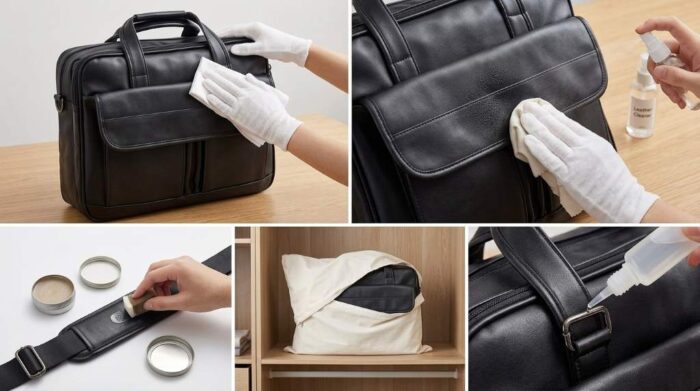
Regular light cleaning prevents dirt from becoming embedded around seams, handles, and zipper tracks. Fortunately, most everyday maintenance requires only a soft cloth and minimal moisture. A few minutes each week can prevent the need for aggressive cleaning later.
First, empty every compartment and shake out loose debris carefully. Next, wipe the exterior with a dry microfiber cloth using gentle strokes. Then, slightly dampen another cloth with clean water and wipe visible marks.
Afterward, dry the surface with a separate soft cloth. Never leave the bag wet while you continue using it. Allow the exterior to air-dry naturally before returning electronics or documents.
Use the Right Cleaning Technique
Do not scrub stains aggressively because friction can damage the surface finish. Instead, dab the affected area and gradually loosen the residue. For stubborn marks, use a small amount of mild soap diluted with water after testing first.
- Dust the bag before introducing moisture.
- Use a barely damp cloth instead of soaking the material.
- Work from the outside of a stain toward its center.
- Dry the area immediately after cleaning.
- Inspect the finish after the area completely dries.
Handle Water, Rain, and Spills Correctly
Water resistance does not mean complete waterproof protection. A water-resistant business bag can still suffer from prolonged exposure, saturated seams, or moisture entering openings. Therefore, respond quickly whenever rain or liquid reaches the bag.
If water spills onto the exterior, blot it gently with a clean absorbent cloth. Do not rub because rubbing can spread moisture across a larger surface. Then open the compartments and let trapped moisture escape naturally.
Keep the bag away from radiators, hair dryers, heaters, and direct high heat. Excessive heat can distort synthetic coatings and accelerate surface deterioration. Instead, place the bag somewhere dry with good airflow.
What To Do After a Coffee Spill
Coffee contains oils and pigments that can leave visible marks after drying. Act quickly by blotting the liquid without pressing it deeper into seams. Follow with a lightly damp cloth and mild soap only when necessary.
Never pour cleaning solution directly onto the bag. Apply a small amount to your cloth instead. This approach gives you better control and reduces unnecessary moisture exposure.
Protect the Zippers, Buckles, and Hardware
Business bags often fail at hardware before the main body shows serious wear. Zippers, buckles, clasps, and metal fittings experience repeated mechanical stress every day. Consequently, hardware deserves its own maintenance routine.
Keep zipper tracks free from dust, fabric fibers, and small debris. If a zipper feels stiff, stop pulling immediately instead of forcing it. Inspect the track for trapped material and remove debris carefully with a soft brush.
Also, avoid carrying the bag by a detachable strap when its hardware looks loose. Check buckles and attachment points periodically for unusual movement or distortion. Early repairs can prevent a small hardware problem from becoming a structural failure.
Keep the Bag Organized Without Overloading It
A large business bag can encourage you to carry more than necessary. However, excessive weight places continuous stress on handles, seams, shoulder straps, and attachment points. It can also deform the bag and make its professional shape look uneven.
Use the laptop compartment for the intended device size and keep heavy objects close to the bag’s center. Place chargers, notebooks, and accessories in separate compartments whenever possible. This arrangement reduces pressure on individual pockets and keeps the interior organized.
- Remove unnecessary papers at the end of each workday.
- Keep heavy accessories away from thin exterior pockets.
- Use protective sleeves for laptops and tablets.
- Avoid forcing oversized items into narrow compartments.
- Check the shoulder strap before carrying a heavily loaded bag.
Protect the Interior and Laptop Compartment
The interior can collect dust, crumbs, pen marks, and moisture even when the exterior looks clean. Emptying the compartments regularly makes interior maintenance much easier. It also helps you discover damaged lining, loose stitching, or forgotten liquids.
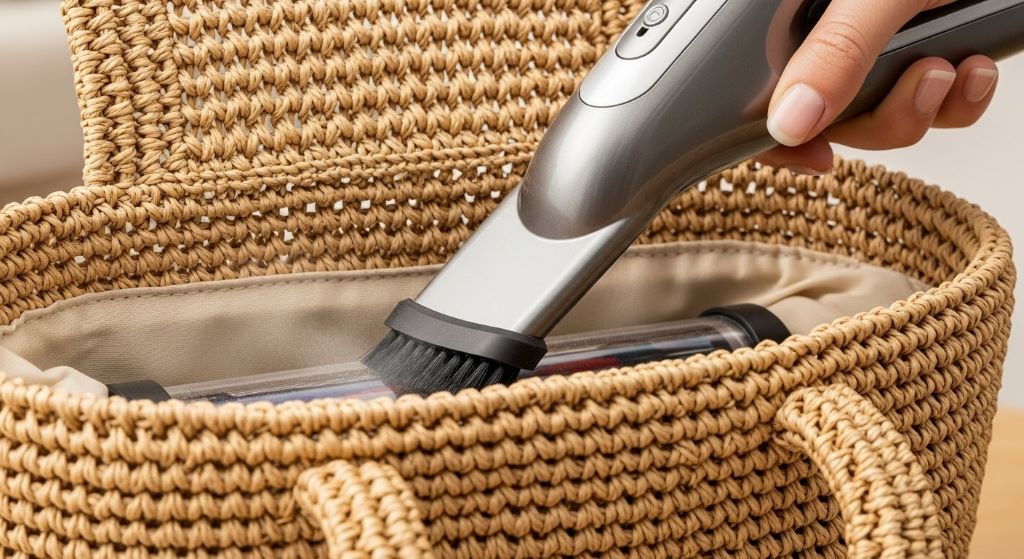
Use a soft brush or handheld vacuum attachment to remove dry debris. For small marks, use a lightly dampened cloth and avoid saturating the lining. Always allow the interior to dry completely before storing electronics.
Never place an uncovered water bottle beside a laptop or important documents. Instead, use a tightly sealed bottle and keep it separated from sensitive equipment. This simple habit can prevent costly damage that cleaning cannot reverse.
Prevent Scratches, Scuffs, and Surface Wear
Most visible bag damage comes from repeated contact with rough surfaces. Office floors, vehicle seats, desks, walls, and luggage compartments can gradually mark the exterior. Therefore, where you place the bag matters as much as how you clean it.
Keep sharp objects away from the exterior and avoid placing the bag against abrasive surfaces. When traveling, position it where zippers, buckles, and corners cannot repeatedly scrape against other luggage. A dedicated compartment or protective sleeve can reduce unnecessary friction.
Deal With Minor Scuffs Carefully
Start by wiping a minor scuff with a clean, slightly damp microfiber cloth. If the mark remains, use a manufacturer-approved cleaner after testing an inconspicuous area. Never use abrasive pads, alcohol-heavy cleaners, or household solvents without material approval.
Store Your Seyfocnia Bag Properly
Good storage prevents deformation, unnecessary creasing, and surface deterioration between uses. First, empty every compartment and remove electronic accessories, papers, and food. Then, gently reshape the bag before placing it in storage.
Store it in a cool, dry location away from direct sunlight. Avoid tightly compressing the bag beneath heavy objects because prolonged pressure can deform its structure. A breathable dust bag can also reduce dust while allowing airflow.
- Empty the bag completely before long-term storage.
- Keep the bag away from excessive humidity.
- Avoid prolonged direct sunlight.
- Maintain its shape without overstuffing it.
- Store straps without sharp bends or excessive tension.
Create a Monthly Inspection Checklist
Monthly inspections help you catch small problems before they interrupt your workday. You do not need specialist equipment or extensive restoration knowledge. A careful visual inspection can reveal most early warning signs.
| Area | What To Check | Recommended Action |
|---|---|---|
| Exterior | Scuffs, stains, peeling, discoloration | Clean gently and monitor changes |
| Zippers | Stiff movement or trapped debris | Clean the track and avoid forcing it |
| Handles | Loose stitching or stretching | Reduce load and arrange repair |
| Shoulder Strap | Cracks, loose fittings, damaged attachment points | Stop heavy use until repaired |
| Interior | Moisture, debris, stains, loose lining | Clean and dry thoroughly |
Know What Not To Use on the Bag
Some household cleaning products can damage coated synthetic leather surprisingly quickly. Strong chemicals may dull the finish, weaken coatings, or alter the material’s texture. Therefore, aggressive cleaning rarely provides a better result.
- Do not use bleach or chlorine-based cleaners.
- Do not use abrasive powders or rough scrubbers.
- Do not soak the bag in water.
- Do not apply furniture polish without material approval.
- Do not use high heat to speed up drying.
- Do not apply heavy leather conditioners to PU leather automatically.
Repair Problems Before They Become Expensive
A loose thread might seem harmless, but continued pulling can enlarge the damaged area. Likewise, a failing zipper can strain nearby seams when you repeatedly force it closed. Address small defects early whenever practical.
Do not cut loose structural stitching unless you understand its purpose. Instead, photograph the problem and seek appropriate repair support. For significant damage, ask the seller or manufacturer about available warranty or repair options.
A Practical Care Schedule That Actually Works
You do not need to clean your business bag every day. A simple schedule works better because it combines frequent light care with occasional detailed inspection.
- Daily: Remove spills quickly and avoid unnecessary overloading.
- Weekly: Dust the exterior and empty unnecessary contents.
- Monthly: Inspect seams, hardware, straps, lining, and surface condition.
- Seasonally: Deep-clean appropriate surfaces and review storage conditions.
- Before travel: Check zippers, straps, compartments, and hardware.
What Competitor Content Often Misses
General leather-care articles usually focus on genuine leather conditioners, oils, and polishing techniques. That advice does not fully address Seyfocnia’s PU leather business bags. A better approach separates synthetic leather care from traditional leather restoration.
This approach also answers practical questions that generic guides frequently overlook. For example, users need guidance about laptop compartments, zipper maintenance, overloading, rain exposure, interior cleaning, and travel storage.
Most importantly, material identification should come before product selection. That single step prevents users from applying unsuitable conditioners or harsh cleaners. It also makes the entire care routine safer, simpler, and more economical.
When Should You Replace Rather Than Clean the Bag?
Cleaning cannot repair structural damage, severe peeling, broken attachment points, or major seam failure. If the bag no longer protects your equipment securely, continued use may create greater problems. Therefore, evaluate function alongside appearance.
Minor cosmetic wear can often remain part of normal use. However, damaged handles, failing closures, exposed structural seams, or compromised laptop protection deserve immediate attention. When repairs become impractical, replacement may offer better long-term value.
Frequently Asked Questions
Can I use regular leather conditioner on a Seyfocnia business bag?
Usually, no, because many Seyfocnia business bags use PU leather that does not need traditional leather conditioning.
Can I wash a Seyfocnia business leather bag with water?
No, avoid soaking the bag and instead use a slightly damp cloth for controlled surface cleaning.
How often should I clean my Seyfocnia business bag?
Perform light cleaning weekly and inspect the bag thoroughly about once each month.
Can rain damage a Seyfocnia business leather bag?
Yes, prolonged moisture can affect seams, openings, lining, and synthetic surfaces despite water-resistant construction.
How can I prevent my business bag from losing its shape?
Keep the load reasonable, distribute contents evenly, and store the empty bag without heavy pressure.
Final Thoughts
Caring for a Seyfocnia business leather bag starts with understanding its material and construction. Gentle cleaning, controlled moisture, sensible loading, hardware checks, and proper storage provide the strongest protection.
Most importantly, build these habits before visible damage appears. Review your bag today, remove unnecessary weight, clean its surfaces gently, and inspect every stress point. With consistent care, your business bag can remain organized, presentable, and dependable through demanding workdays.