
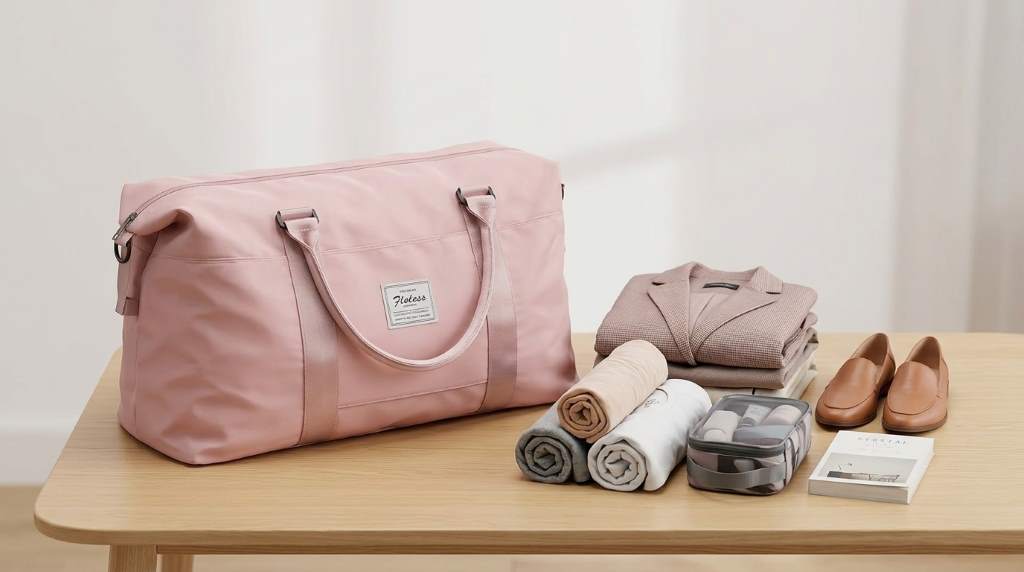
You can fit more in a Hyc00 travel duffel bag by reducing bulk, filling empty spaces, and packing by zones. For a two-night trip, aim for two complete outfits, one travel outfit, and only essential extras. The key is not stuffing harder, but using the bag’s available space more intelligently.
A well-packed duffel should stay organized, accessible, and comfortable to carry. Moreover, efficient packing helps prevent wasted corners, bulky layers, and unnecessary duplicates. This guide explains practical methods that maximize capacity without turning your bag into an overstuffed bundle.
Start With A Packing Strategy
Before placing anything inside, decide exactly what the trip requires. Then remove anything that serves the same purpose as another item.
For a short trip, build your packing list around activities rather than hypothetical situations. This approach prevents the common habit of carrying several backup items that rarely leave the bag.
- Choose complete outfits instead of unrelated clothing pieces.
- Select one versatile outer layer whenever possible.
- Limit footwear to the pairs you genuinely need.
- Pack travel-sized toiletries instead of full-size containers.
- Reserve a small space for souvenirs or purchases.
Use The HYC00 Bag’s Space By Zone
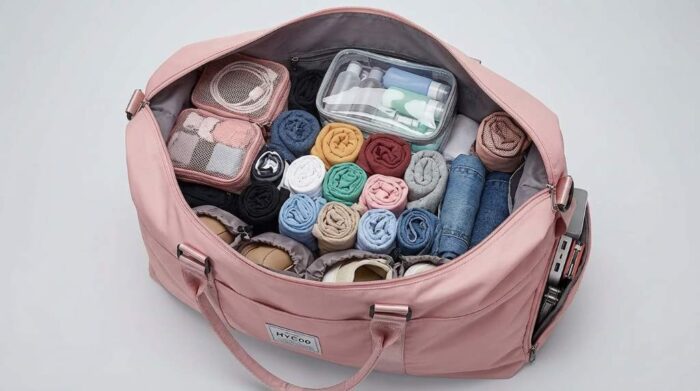
Think of your duffel as several packing zones rather than one large compartment. This simple mental shift makes every section easier to use.
Place items according to their shape, weight, frequency of use, and cleanliness. Consequently, bulky items stop competing with small essentials for the same space.
| Zone | Best Items | Packing Goal |
|---|---|---|
| Bottom | Shoes and heavier items | Create a stable foundation |
| Center | Rolled clothing and cubes | Use the largest open space |
| Corners | Socks, underwear, and soft items | Fill irregular gaps |
| Outer pockets | Small essentials | Keep frequent items accessible |
| Wet pocket | Wet clothes and towels | Separate damp belongings |
Pack Shoes First
Shoes often consume more usable volume than travelers expect. Therefore, decide your footwear before packing the rest of your clothing.
Wear your bulkiest practical shoes during travel when conditions allow. Pack the lighter pair inside the designated shoe area or along the bottom of the bag.
Never leave the inside of your shoes empty. Fill them with rolled socks, underwear, belts, or other small flexible items.
Position Shoes To Protect Your Clothing
Place shoes with their soles facing away from clean clothing whenever possible. Use lightweight shoe bags if your footwear could transfer dirt or moisture.
For two pairs, position them heel-to-toe when their shapes allow it. This arrangement reduces awkward gaps and creates a flatter packing surface.
Roll Soft Clothing Instead Of Folding Everything
Rolling works particularly well for T-shirts, underwear, socks, sleepwear, and lightweight athletic clothing. These flexible pieces can occupy narrow gaps that folded stacks often leave unused.
However, do not roll every garment automatically. Fold structured shirts, jackets, and wrinkle-prone pieces when that method protects their shape better.
Keep each rolled item compact rather than making loose cylinders. Tight rolls create more predictable shapes and make the main compartment easier to arrange.
Build Outfits Before Packing
Pack complete outfits instead of separating shirts, pants, and accessories into unrelated groups. This method reduces overpacking because every garment must serve a specific combination.
For a two-night trip, start with two primary outfits and one travel outfit. Then add sleepwear, underwear, socks, and one versatile layer.
Choose colors and styles that work together across multiple combinations. As a result, one pair of pants can support several different looks.
Try The One-Base, Multiple-Look Method
Select one neutral bottom that works with several tops. Then choose lightweight layers that can change the appearance without adding much volume.
For example, one pair of pants can support casual sightseeing and dinner. A lightweight overshirt can then function as an extra layer or standalone top.
Use Packing Cubes Without Wasting Space
Packing cubes can improve organization, but oversized cubes can actually waste duffel space. Choose flexible cubes that match the bag’s interior shape.
Use separate cubes for underwear, tops, and activity-specific clothing. Keep each cube moderately filled so it remains flexible enough for irregular spaces.
Compression cubes can reduce clothing volume further, especially with soft garments. However, compression cannot make an unnecessarily large wardrobe genuinely necessary.
Fill Every Awkward Gap
Small gaps often account for surprisingly valuable capacity inside a soft duffel. Therefore, inspect the corners and spaces between larger items before closing the bag.
Use socks, underwear, swimwear, belts, and lightweight accessories as gap fillers. These flexible items can conform to spaces that rigid objects cannot use efficiently.
- Push rolled socks into narrow side gaps.
- Place underwear around the edges of larger cubes.
- Use belts around the perimeter instead of coiling them tightly.
- Place soft accessories inside unused corners.
- Fill empty shoe interiors with small clothing pieces.
Use The Wet Pocket Correctly
If your HYC00 bag includes a wet pocket, treat it as dedicated functional space. Keep damp towels, swimwear, or workout clothing separated from dry garments.
Do not fill this compartment with dry clothing simply because it looks empty. Maintaining its purpose can prevent moisture from forcing you to repackage your entire bag.
Reduce Toiletry Bulk
Toiletries can consume valuable space because many containers have rigid shapes. Replace bulky bottles with appropriately sized travel containers whenever practical.
Prioritize products you actually need during the trip. Avoid packing full grooming collections when a compact routine can handle the same tasks.
- Use small containers for shampoo and conditioner.
- Choose a compact toothbrush and toothpaste.
- Carry multipurpose skincare products when suitable.
- Remove unnecessary packaging before departure.
- Keep liquids together inside a leak-resistant pouch.
Keep Electronics Compact
Cables and chargers create hidden clutter when you pack them separately. Gather compatible cables into one compact organizer or pouch.
Use shorter charging cables when they meet your needs. Remove duplicate adapters unless your destination or equipment genuinely requires them.
Keep power banks and frequently needed electronics near the top. This placement prevents you from unpacking the entire bag during travel.
Pack Heavy Items Strategically
Heavy objects should not float randomly throughout the bag. Place them low and near the center to create better weight distribution.
Keep hard objects away from delicate clothing whenever possible. Surround them with softer garments to reduce empty space and protect fragile items.
A balanced bag also feels easier to carry. Therefore, maximizing capacity should never mean creating an uncomfortable weight distribution.
Use The Corners For Flexible Items
Soft duffels naturally create rounded corners that rectangular items cannot fully occupy. Those spaces become useful storage areas for flexible belongings.
Place scarves, socks, lightweight shirts, and other soft pieces around the edges. Avoid forcing rigid objects into curved spaces because they create inefficient gaps elsewhere.
Pack Frequently Needed Items Last
Think about what you will need before reaching your destination. Place those items where you can access them without disturbing the main packing structure.
Keep travel documents, headphones, chargers, medications, and snacks in suitable accessible pockets. Meanwhile, rarely needed items should remain deeper inside the bag.
Create A Top Layer
Finish your main compartment with lightweight items that you may need first. A compact jacket, sleepwear, or change of shirt works well here.
This top layer also protects packed items from shifting. Additionally, it gives you a clear visual signal when the bag approaches capacity.
Use The Inside Of The Bag Efficiently
Do not pack only from the bottom upward without checking the bag’s shape. Instead, build layers that follow the natural dimensions of the compartment.
Place flatter items along broad surfaces and cylindrical rolls across the middle. Then use small flexible pieces to close remaining gaps.
Every layer should create a useful surface for the next layer. This technique prevents large empty cavities from developing beneath your clothing.
What Not To Do When Maximizing Space
Some packing habits appear efficient but eventually create more problems. Avoid methods that increase bulk, reduce access, or put unnecessary stress on the bag.
- Do not pack multiple outfits for imaginary situations.
- Do not carry several pairs of heavy shoes.
- Do not stuff rigid containers into every available gap.
- Do not overfill every pocket before using the main compartment.
- Do not force the zipper around an excessively bulging load.
- Do not sacrifice weight balance simply to carry more items.
Check Carry-On Requirements Before Flying
A flexible duffel can change shape when packed, so empty dimensions do not tell the whole story. Before flying, check your airline’s current baggage requirements.
Pack the bag while keeping its exterior reasonably flat and controlled. A bag that technically fits when empty may become too large after aggressive packing.
Also consider weight limits rather than focusing only on volume. More available space does not mean you should fill every cubic inch.
A Simple HYC00 Packing Formula
Use a four-stage sequence whenever you need maximum usable capacity. This system works because each stage solves a different packing problem.
- Stage 1: Remove unnecessary items before opening the bag.
- Stage 2: Pack shoes, heavy items, and structured pieces first.
- Stage 3: Add rolled clothing and organized packing cubes.
- Stage 4: Fill corners with flexible small items.
Finally, close the bag without forcing the zipper. If the zipper resists, remove bulky items instead of compressing everything harder.
How To Fit More Without Overpacking
The smartest way to increase capacity involves reducing volume rather than adding pressure. Start by eliminating duplicate items, then compress only the clothing that benefits from compression.
Next, exploit every interior gap without creating a disorganized pile. Finally, reassess the bag after packing and remove anything you probably will not use.
This final edit often creates more usable room than another packing accessory. More importantly, it keeps the bag practical throughout the trip.
Quick Packing Checklist
- Choose outfits before choosing individual garments.
- Wear the bulkiest suitable shoes during travel.
- Pack lighter footwear strategically.
- Fill shoes with small flexible items.
- Roll soft clothing tightly.
- Fold structured garments carefully.
- Use appropriately sized packing cubes.
- Fill corners with soft belongings.
- Separate wet items from dry clothing.
- Keep frequently needed items accessible.
- Distribute heavy items near the bottom center.
- Test the zipper before leaving home.
FAQs About Fitting More In A HYC00 Travel Duffel Bag
What is the best way to fit more clothes in a HYC00 bag?
Roll lightweight clothing, pack complete outfits, and fill unused gaps with small flexible items.
Should shoes go inside or outside the main compartment?
Use the dedicated shoe area when available because it keeps footwear separate from clean clothing.
Do packing cubes save space in a HYC00 duffel?
Yes, properly sized cubes can improve space use by compressing and organizing soft clothing.
How can I reduce toiletry space?
Use travel-sized containers, remove unnecessary packaging, and carry only products you genuinely need.
Can I overpack a HYC00 travel duffel bag?
Yes, excessive packing can create zipper strain, poor weight balance, and problems with airline size limits.
Conclusion
Fitting more into a HYC00 travel duffel bag requires strategy, not brute force. Start with a focused packing list, then use shoes, corners, pockets, cubes, and clothing layers efficiently.
Before your next trip, pack using the four-stage method and perform one final edit. You will gain useful space while keeping the bag organized, balanced, and easier to carry.