
Yes, you can save significant luggage space with packing cubes when you use them correctly. The best approach involves rolling clothes, grouping similar items, and assigning each cube a specific purpose. Using Bagail 8 set packing cubes helps organize belongings while reducing wasted space inside your suitcase.
Travel studies suggest that organized luggage can improve packing efficiency by more than 30%. Additionally, travelers often spend less time searching for items when every category has a designated storage area. This guide explains practical methods that maximize every inch of suitcase capacity while keeping belongings accessible and protected.
Why Packing Cubes Create More Space
Many travelers assume packing cubes simply organize clothing. However, their real advantage comes from controlling unused gaps inside luggage. Structured packing prevents items from shifting during transit.
Without organization, clothing spreads unevenly throughout a suitcase. Consequently, empty pockets form between garments. Packing cubes compress these spaces and create a more efficient layout.
Understanding The Bagail 8 Set Packing Cubes System
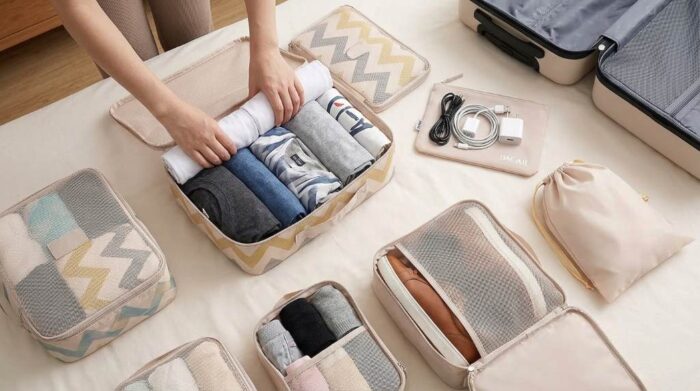
The set typically includes multiple cube sizes and accessory bags. Each piece serves a different storage function. Therefore, travelers can separate clothing categories without creating clutter.
Different cube dimensions allow strategic packing based on item size. Larger cubes hold bulkier garments, while smaller cubes accommodate accessories. This layered approach improves overall suitcase utilization.
Common Components In The Set
- Large packing cube for jackets and sweaters
- Medium cube for shirts and casual wear
- Small cube for undergarments
- Shoe storage bag
- Laundry bag
- Accessory pouch
- Toiletry organizer
- Additional travel storage pouch
Start With A Packing Plan
Space saving begins before placing items into cubes. First, review your itinerary and identify essential clothing. This step prevents unnecessary packing.
Many travelers pack for unlikely situations. Instead, focus on versatile pieces that serve multiple purposes. As a result, luggage remains lighter and easier to organize.
Create Clothing Categories
Separate items into logical groups before packing. This method improves organization and reduces repacking time later. It also helps determine which cube size fits each category.
- Tops
- Bottoms
- Sleepwear
- Undergarments
- Workout clothing
- Accessories
- Outerwear
Use The Rolling Method For Maximum Capacity
Rolling clothing remains one of the most effective packing techniques. Unlike traditional folding, rolling minimizes air pockets between garments. Consequently, more items fit inside each cube.
Soft fabrics respond particularly well to rolling. T shirts, leggings, shorts, and casual dresses become compact cylinders. These shapes stack neatly within packing cubes.
Best Clothing For Rolling
- T shirts
- Tank tops
- Jeans
- Leggings
- Shorts
- Casual dresses
- Light sweaters
Meanwhile, structured garments often benefit from careful folding. Blazers and dress shirts usually maintain their appearance better when folded properly.
Assign A Purpose To Every Cube
One common mistake involves mixing unrelated items together. Although this seems efficient initially, it creates confusion later. Dedicated cube assignments maintain order throughout the trip.
For example, place all tops inside one cube and bottoms inside another. Then reserve smaller cubes for socks and undergarments. This strategy simplifies unpacking and repacking.
Sample Cube Allocation
| Cube Size | Recommended Contents |
|---|---|
| Large | Jackets, sweaters, jeans |
| Medium | Shirts, dresses, casual outfits |
| Small | Socks, underwear, accessories |
| Pouch | Electronics and chargers |
Layer Cubes Strategically Inside The Suitcase
Cube placement affects overall storage efficiency. Heavier cubes should rest near the suitcase wheels. This arrangement improves balance and stability.
Next, position medium cubes in the center area. Finally, place lighter cubes on top. As a result, available space remains evenly distributed.
Small gaps often appear around cube edges. Therefore, use those spaces for belts, scarves, or charging cables. Every corner becomes functional storage.
Compress Bulkier Clothing Efficiently
Sweaters and jackets consume considerable luggage space. Fortunately, large packing cubes help contain these items effectively. Careful compression creates additional room for essentials.
Avoid overstuffing cubes beyond their intended capacity. Excessive pressure may cause wrinkles and make organization difficult. Instead, distribute bulk across multiple cubes.
Bulky Item Compression Tips
- Fold sleeves inward first
- Remove trapped air gradually
- Place heavier items at cube bottoms
- Use larger cubes for outerwear
- Avoid mixing shoes with clothing
Separate Clean And Dirty Clothing
Many travelers overlook laundry management during trips. However, dirty clothing can quickly disrupt organized luggage. Dedicated separation keeps the system efficient.
The included laundry bag provides a practical solution. Throughout the trip, transfer worn clothing immediately. Consequently, clean garments remain accessible and fresh.
Save Space With Shoe Organization
Shoes often create packing challenges due to their shape. Fortunately, shoe bags isolate footwear while protecting clothing. This separation improves hygiene and organization.
Fill shoe interiors with socks or small accessories. Therefore, unused internal space becomes functional storage. Small adjustments like this create noticeable capacity gains.
Pack For Easy Access During Travel
Space savings matter, but accessibility remains equally important. Frequently used items should stay near the top of luggage. This arrangement reduces unnecessary unpacking.
Travel documents, chargers, and toiletries often require quick access. Therefore, keep them in dedicated pouches. Organized retrieval prevents disruption of the entire packing system.
Avoid Common Packing Cube Mistakes
Several habits reduce the effectiveness of packing cubes. Recognizing these issues helps maximize available space. Small adjustments often produce significant improvements.
- Overpacking every cube
- Ignoring cube size differences
- Mixing unrelated clothing categories
- Leaving empty cube corners unused
- Packing unnecessary duplicate outfits
- Failing to separate laundry
Additionally, many travelers skip planning before packing. Yet preparation remains one of the strongest space saving strategies available.
How Packing Cubes Improve Travel Beyond Space Saving
Efficient packing delivers benefits beyond luggage capacity. Organized belongings simplify airport security checks and hotel stays. Travelers spend less time searching for essentials.
Furthermore, packing cubes support better trip management. Clothing remains categorized from departure through return. This consistency reduces stress throughout the journey.
Final Thoughts
Saving space with packing cubes depends on technique rather than compression alone. Rolling clothing, assigning cube purposes, and filling unused gaps create the greatest results. When used strategically, the Bagail 8 Set Packing Cubes system transforms luggage into an organized and highly efficient travel setup.
Before your next trip, create a packing plan and test these methods at home. A few simple adjustments can increase suitcase capacity while making travel smoother and more organized.
FAQs
Do packing cubes actually save suitcase space?
Yes, they reduce wasted gaps and organize clothing more efficiently.
Should I roll or fold clothes inside packing cubes?
Rolling usually saves more space for casual and soft garments.
Can packing cubes reduce clothing wrinkles?
Yes, organized storage helps minimize shifting and wrinkle formation.
Which cube size should hold bulky clothing?
Large cubes work best for sweaters, jackets, and heavier garments.
Are packing cubes useful for short trips?
Yes, they improve organization and simplify packing for any trip length.