
A well-organized lawyer bag can carry the tools needed for court, client meetings, and commuting. The Jackchris Mens Lawyer Bag offers enough structured space for professional essentials without becoming unnecessarily bulky. Many work bags now prioritize laptop protection, document storage, and flexible organization. That combination matters because lawyers often move between offices, hearings, meetings, and daily travel. This guide explains what fits inside, how to organize it, and what deserves each compartment.
What Fits Inside the Jackchris Mens Lawyer Bag?
The Jackchris Mens Lawyer Bag can hold a laptop, files, notebooks, chargers, pens, documents, and everyday accessories. You can also carry a tablet, phone, wallet, keys, business cards, and compact personal items. However, smart organization matters more than filling every available space.
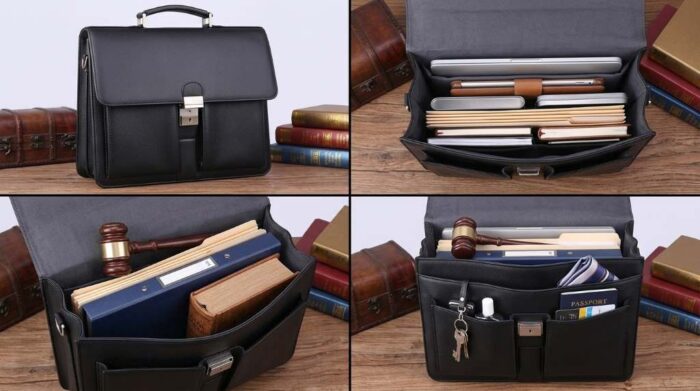
A professional briefcase works best when frequently used items remain accessible. Therefore, place heavier equipment close to your back and smaller essentials in quick-access compartments.
| Item | Best Storage Area | Organization Tip |
|---|---|---|
| Laptop | Padded main compartment | Keep it protected and upright |
| Legal documents | Dedicated document section | Use folders to prevent bending |
| Notebook | Front or secondary compartment | Keep it easy to reach |
| Charger | Small accessory pocket | Wrap the cable neatly |
| Pens | Pen holders | Keep preferred pens together |
| Phone and wallet | Quick-access pocket | Avoid placing them under documents |
1. Laptop and Tablet
Your laptop usually becomes the bag’s most important electronic item. Place it inside the designated padded section before adding heavier objects around it.
A tablet can often share the electronics area when sufficient room remains. Still, avoid forcing multiple devices into a compartment that feels tight or compressed.
Keep Electronics Protected
First, close each device before placing it inside the bag. Then position charging cables separately to prevent pressure against screens.
Additionally, consider a slim laptop sleeve when you regularly travel through crowded environments. Extra protection makes sense when your device contains confidential work or irreplaceable files.
2. Legal Files and Case Documents
Legal documents represent another major reason to choose a structured lawyer bag. You can organize pleadings, contracts, notes, case materials, and meeting documents inside folders.
Use separate folders for different matters whenever possible. Consequently, you reduce searching time and lower the chance of mixing documents from unrelated cases.
Use a Simple File System
- Keep active case documents in one dedicated folder.
- Store meeting materials in a separate slim folder.
- Place blank paper behind frequently used documents.
- Keep sensitive paperwork away from exterior pockets.
For court days, organize documents according to the order you expect to use them. This approach lets you retrieve papers quickly without unpacking your entire bag.
3. Notebook, Legal Pad, and Writing Tools
A lawyer still needs reliable writing tools despite increasing digital workflows. Keep a notebook or legal pad in a flat compartment where pages stay accessible.
Store pens in dedicated holders whenever available. Otherwise, use a small pen pouch instead of allowing loose pens to scatter inside the main compartment.
Carry Only Useful Writing Tools
Two dependable pens usually cover everyday needs better than a collection of unused stationery. You can add a highlighter, pencil, or stylus when your workflow requires them.
Furthermore, keeping stationery compact preserves room for documents and electronics. That balance makes the bag easier to carry throughout a long workday.
4. Charger, Power Bank, and Cables
Electronic accessories occupy surprisingly little space when organized correctly. Keep your laptop charger, phone cable, adapter, and power bank together.
A small cable pouch prevents tangled wires from occupying the main compartment. It also makes airport security, office setup, and emergency charging considerably easier.
- Laptop charging adapter
- Phone charging cable
- Compact power bank
- Universal charging adapter
- Small cable organizer
Do not carry every cable you own. Instead, pack only accessories that support the devices you actually use that day.
5. Smartphone, Wallet, Keys, and Business Cards
Small personal items deserve quick-access storage because you reach for them repeatedly. Keep your phone, wallet, keys, and business cards away from bulky documents.
Exterior or upper pockets can work well for these essentials when they provide secure closure. However, avoid storing valuables where they could easily fall out during movement.
Make Daily Access Faster
Create one consistent location for each frequently used item. Then return every item to that location after meetings, hearings, or commutes.
This simple habit prevents the familiar problem of searching through a professional bag. It also keeps your workspace more organized when you arrive at meetings.
6. Business and Personal Accessories
The bag can accommodate several compact accessories beyond traditional legal equipment. These items become especially useful during full-day schedules away from your office.
- Business card holder
- Reading glasses
- Compact notebook
- Hand sanitizer
- Small tissue pack
- Earbuds
- Breath mints
- Compact umbrella when space permits
Choose compact versions whenever possible because unnecessary bulk quickly reduces usable capacity. Moreover, keep personal items separate from client documents whenever the bag provides multiple sections.
7. What Should Stay Out?
A professional lawyer bag should carry useful equipment rather than everything you might possibly need. Heavy books, oversized accessories, duplicate chargers, and unnecessary paperwork can quickly create excess weight.
Remove expired documents after completing each matter. Likewise, review your bag weekly and eliminate receipts, empty packaging, and unused accessories.
Avoid Overloading the Main Compartment
Overloading makes documents harder to retrieve and can place unnecessary pressure on electronics. It can also make the bag uncomfortable during extended commuting.
Instead, divide belongings according to frequency, weight, and sensitivity. Keep essential items accessible while placing rarely used items deeper inside.
How to Organize the Bag for Court
Court days require faster access than ordinary office days. Therefore, prepare the bag around the documents and devices you expect to use first.
- Place the laptop securely in its padded section.
- Arrange case files in chronological or procedural order.
- Keep your notebook immediately accessible.
- Store pens where you can reach them quickly.
- Keep identification and personal essentials in secure pockets.
- Pack chargers only when you expect to need them.
Before leaving, perform a quick document check against your day’s schedule. This step can prevent avoidable interruptions during hearings or client meetings.
How to Organize It for Business Meetings
Business meetings usually require fewer case materials but more presentation-ready organization. Carry your laptop, notebook, documents, charger, business cards, and essential personal items.
Keep presentation materials flat and separate from cables or personal belongings. Consequently, you can remove meeting documents without exposing everything else inside the bag.
How to Pack for Daily Commuting
Daily commuting calls for a lighter setup than court preparation. Start with the laptop, charger, notebook, phone, wallet, keys, and necessary paperwork.
Next, remove anything unrelated to your day’s schedule. This approach reduces unnecessary weight and leaves space for occasional purchases or personal items.
Why Compartmental Organization Matters
Compartmental organization does more than make a lawyer bag look tidy. It reduces retrieval time, protects delicate equipment, and keeps professional materials separated.
It also creates a repeatable packing routine. Once each category has a consistent location, you can prepare the bag faster each morning.
Competitor Content Gaps Worth Considering
Many product articles focus heavily on appearance, material, and general professional styling. They often provide less practical guidance about daily packing and compartment-based organization.
A stronger approach answers the real question behind the purchase: what can I carry without creating unnecessary bulk? Therefore, this guide emphasizes realistic workday contents, packing priorities, and situation-specific organization.
Another common gap involves distinguishing court preparation from ordinary commuting. These situations require different contents, so one generic packing list rarely provides enough practical value.
A Practical Daily Packing Formula
Use a simple three-layer system when packing your Jackchris lawyer bag. Place technology first, professional materials second, and personal essentials last.
- Layer one: laptop, tablet, and protected electronics.
- Layer two: files, notebook, folders, and writing tools.
- Layer three: wallet, keys, phone, cards, and personal accessories.
Finally, check the bag’s weight before leaving. If something serves no purpose that day, leave it behind.
How to Get the Most From the Bag
Think about frequency rather than simply available storage when assigning each compartment. Items you use constantly should remain closer to the opening.
Meanwhile, sensitive documents should stay protected and separated from casual-access items. This system keeps your work materials orderly without turning the bag into an overfilled container.
Clean the interior periodically and inspect zippers, seams, handles, and compartment linings. Regular care helps preserve organization while making problems easier to notice early.
Final Takeaway
The Jackchris Mens Lawyer Bag can serve as a practical mobile workspace for legal and business essentials. A laptop, files, notebook, writing tools, chargers, phone, wallet, and compact accessories fit naturally into a well-planned setup.
The key lies in organizing by frequency, weight, and purpose rather than filling every compartment. Before your next workday, pack only what supports your schedule and keep each essential in its assigned location.
Frequently Asked Questions
Can a laptop fit inside the Jackchris Mens Lawyer Bag?
Yes, the bag is designed to accommodate a laptop within its structured electronics storage area.
Can I carry legal documents inside this lawyer bag?
Yes, its structured interior provides useful space for organized files, folders, paperwork, and notebooks.
Can the bag hold a charger and accessories?
Yes, compact chargers, cables, power banks, and similar accessories can fit when organized efficiently.
Is the bag suitable for court days?
Yes, you can organize case files, writing tools, electronics, and personal essentials for court-related work.
How can I prevent the bag from becoming too heavy?
Carry only items required for your schedule and remove duplicate accessories or unnecessary paperwork regularly.